1987Modelling knowledge and learning
Good examined intelligent computer-assisted instruction, including models of the learner, teacher and natural environment. Diagnosing misconceptions and providing meaningful science-learning environments were central concerns.[1]
2002–2015A small indexed research base
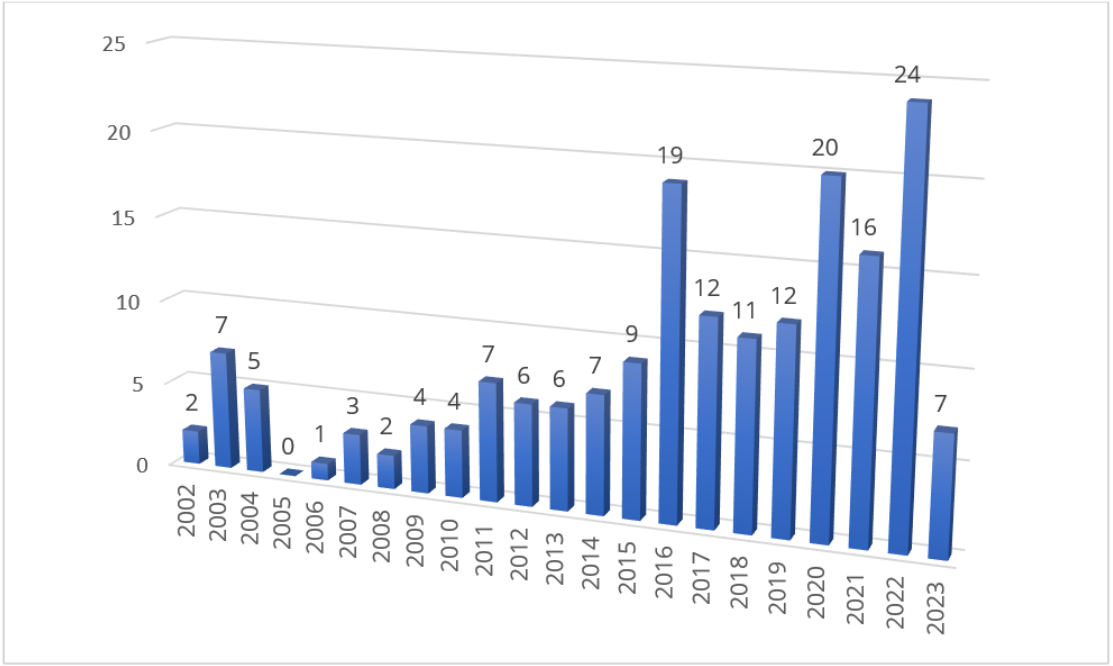
A later Scopus review found relatively few publications during this period. Its search begins in 2002, which is a database coverage boundary, not the origin of AI in science education.[2]
2016Scoring scientific explanations
Liu and colleagues validated machine scoring for eight inquiry assessment items requiring students to explain phenomena using evidence. The study examined agreement with human scoring for these items, establishing a specific assessment application.[4]
2020Assessment research takes stock
Zhai and colleagues reviewed 49 studies of machine learning in science assessment. Much of the work concerned scoring accuracy and validity; fewer studies investigated how these systems changed classroom teaching and learning.[5]
2023Inquiry chatbots and generated materials
Inquirybot used planned dialogue to guide an investigation of sound transmission. In the same year, Cooper explored ChatGPT for science explanations and teaching materials. A scripted inquiry chatbot and a general-purpose generative model offer different kinds of support.[6][7]
2024 · Review of 2013–2023A broader school-science landscape
Jia, Sun and Looi synthesised 76 studies of primary and secondary science education, identifying applications including educational robots, tutoring and data-driven assessment. Their review was published online on 6 October 2023 and appeared in the 2024 journal volume.[3]